There is a silent predator lurking in the transition between insurance policies. It doesn’t make a sound, and it doesn't show up on a balance sheet until it’s far too late. It is a period of extreme vulnerability that we call the Asset Protection Void: the dangerous space where an asset’s equity can be left exposed because its condition was never locked down with forensic proof. For lenders, insurance agents, and asset managers, this is not a clerical technicality. It is a structural failure that can lead to the erosion of protected value.
When a vehicle moves from one insurance carrier to another, or when a policy is renewed after a brief lapse, a doorway opens. Through this doorway, insurance carriers can: and frequently do: escape their obligations. They do this by leaning on a single, devastating assumption: if you can’t prove the damage is new, they will prove it is old.
This is the asset protection crisis hiding inside the "Proof of Unrepaired Damage" window, and if you aren’t actively closing this gap, you are leaving your portfolio exposed to denied claims and silent depreciation. This is where the Asset Guardian either steps forward or gets outflanked.
The silent crisis of the carrier transfer
Imagine a vehicle owner who switches insurance companies to save on monthly premiums. The transition seems seamless. The new policy is bound, the first payment is made, and everyone breathes a sigh of relief. But three months later, a hailstorm pummels the area, or a minor collision occurs. The owner files a claim, expecting the protection they paid for.
Instead, they receive a cold, clinical denial letter. The carrier’s field adjuster points to a few minor scuffs or a slightly misaligned panel and claims the damage is "pre-existing." They argue that the damage occurred during that invisible window before their policy took effect.
Without a baseline, without a forensic record of the vehicle’s condition at the exact moment the policy began, the owner is defenseless. They are trapped in a "he-said, she-said" battle with a multi-billion dollar corporation that has better lawyers and more data. For a bank or a credit union holding the note on that car, the collateral just took a massive hit in value, and the insurance meant to protect that value has vanished into the Asset Protection Void.
The domino effect of missing documentation
This isn't just about one frustrated car owner. This is a systemic risk. When claims are denied based on the "unrepaired damage" loophole, the consequences ripple outward like a slow-motion car crash.
- The Collateral Plummet: When an insurance company refuses to pay for repairs, the vehicle remains damaged. A damaged car is worth significantly less than a pristine one. If the borrower defaults, the lender is left with a "paperweight" on wheels that cannot be sold for the remaining loan balance.
- The Legal Quagmire: Disputing a "pre-existing damage" claim requires experts, engineers, and thousands of dollars in legal fees. For most people, it’s a battle they can't afford to fight, so they simply lose.
- The Relationship Fracture: For insurance agents and loan officers, a denied claim is a betrayal of trust. You promised protection; the carrier delivered a technicality.
We see this happening every day. It is a heartbreaking reality where families lose their primary mode of transportation and lenders lose their security, all because of a missing set of date-stamped photos.

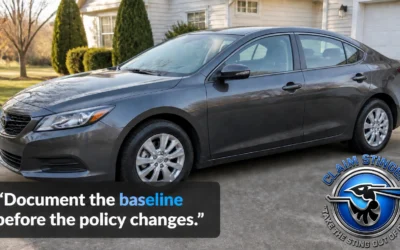
(Note: I will generate a new image for the documentation aspect to maintain variety and follow the 4-6 image rule.)
A gut check for asset protectors
Ask yourself this uncomfortable question: If your entire vehicle portfolio was hit by a hail storm tomorrow, how many of those claims would be denied because you cannot prove the vehicles were "clean" when the policies started?
If you don't have an answer, you are sailing a sinking ship. You are relying on the "honor system" in an industry that is increasingly driven by automated denial algorithms. The burden of proof has shifted. It is no longer the insurance company’s job to prove the damage is old; it is your job to prove it is new.
The Framework: Bridging the Asset Protection Void
To survive this environment, you need more than awareness. You need an asset defense strategy. You need a way to lock in the condition of an asset at inception, creating a permanent, unalterable record that shields the asset’s equity from insurance carrier tactics and closes the vulnerability before it can spread.
At Claim Stinger, we call this the Forensic Toolbox. It is the bridge across the gap. It is the weapon of choice for the Asset Guardian.
Our Vehicle Condition Reports are a core part of that toolbox. This isn't just a handful of blurry photos taken on a flip phone. This is a secure, timestamped, and location-verified documentation process that creates a high-resolution map of the vehicle's state and helps ensure the asset’s equity is never left exposed inside the Asset Protection Void.
For organizations that need more than software alone, Claim Stinger Consulting works with B2B clients to identify where the Asset Protection Void opens, how insurance carrier tactics exploit it, and what high-level processes are needed to close it before silent depreciation spreads across a loan portfolio. This is not a side project. It is part of a bigger mission to overhaul how the industry defends client assets.
How to implement the Asset Protection strategy
- Mandate Condition Reports at Policy Inception: Whether you are an agent or a lender, require a digital inspection the moment a vehicle enters your system.
- Arm Your Team With the Forensic Toolbox: Do not rely on images stored in a personal cloud or sent by text. You need secure documentation, verified timestamps, and professional reporting that can stand up when a carrier tries to push damage backward in time.
- Close the Vulnerability During Carrier Changes: When a client switches carriers, a new report should be generated immediately so the asset’s equity is not left exposed during the transfer window.
- Operate Like an Asset Guardian, Not a Paper Pusher: This is where Claim Stinger Consulting comes in. We help B2B partners create repeatable workflows, staff talking points, and protection checkpoints so the Asset Protection Void is managed as a portfolio risk, not treated like an isolated claim surprise.
Empowering the protector: A conversational script
How do you explain this to a client or a member without sounding like a harbinger of doom? You frame it as a service of protection.
The Script:
"Mr. Client, when we move your coverage to this new carrier, there’s a small 'blind spot' that opens up. If you have an accident later, the new company might try to claim some of the damage was already there. To prevent them from ever being able to use that excuse, I want you to take five minutes to complete a quick condition report through this secure link. It creates a 'digital birth certificate' for your new policy. If a claim ever happens, they won't have a leg to stand on. It’s about making sure your investment is actually protected, not just 'on paper'."
By using this approach, you aren't just selling a service; you are stepping into the role of an Asset Guardian. You are helping them prove the work was done professionally, defend their equity, and protect their financial future.
The Hero’s Journey: From vulnerable to shielded
The insurance industry is changing. Carriers are looking for any reason to reduce their "loss ratios," and the "unrepaired damage" window is one of their most effective tools. But you have the power to change the narrative.
When you implement a system of forensic documentation, you move from being a victim of the system to being the master of it. You become the Asset Guardian: the one who closes the vulnerability in asset defense before a carrier can exploit it.
Don't wait for the next major storm or the next "heartbreaking" denial letter to realize your portfolio is vulnerable. The time to act is now. Bridge the gap. Deploy the Forensic Toolbox. Protect client assets at all costs.
Visit our Asset Protection page to see how we are helping banks, credit unions, and agents shield their clients from the Asset Protection Void. If your organization needs a higher-level rollout strategy, Claim Stinger Consulting helps B2B teams use the Forensic Toolbox to build a disciplined portfolio defense system and drive the larger mission to overhaul the industry standard for asset protection. Your assets deserve more than a "maybe" when it comes to protection. They deserve the truth.
About Claim Stinger
We provide insurance claim documentation software that helps people protect their assets through detailed reporting. Our software creates secure, timestamped documentation that insurance companies accept, making claims processing faster and reducing disputes. Through Claim Stinger Consulting, we also work with B2B clients to deploy the Forensic Toolbox as an Asset Protection strategy, helping them step into the role of Asset Guardian and protect client assets from silent depreciation and insurance carrier tactics. Whether it's a Closed Claim Report or a Diminished Value Claim Report, we give you the tools to fight back and win.
0 Comments