
The modern total-loss decision can feel like a trapdoor. One moment, your vehicle is being evaluated for repairs. The next, an insurer tells you it is “totaled,” your loan balance is still outstanding, and the settlement offer appears disconnected from what your car was actually worth.
The pressure is intensifying. Parts, labor, diagnostic procedures, structural inspections, and safety-system calibrations can push a borderline claim toward total-loss territory faster than many vehicle owners expect.
But a total-loss decision is not automatically the final word.
It is a calculation shaped by state law, policy language, actual cash value, estimated repair costs, salvage considerations, vehicle safety, and the insurer’s methodology. You may not be able to prevent every total loss, and no documentation service can promise that you will. However, you can challenge incomplete facts, incorrect valuation, and unsupported assumptions before you surrender the asset.
“A total-loss number is not automatically the final word.”
The silent crisis behind a “totaled” vehicle
Insurers generally compare the vehicle’s pre-loss actual cash value, or ACV, against the estimated cost of repair. Depending on the state, a vehicle may be considered a total loss when repairs reach a specified percentage of ACV, or when repair costs plus salvage value meet or exceed the vehicle’s value under a total-loss formula.
For example, if a vehicle’s ACV is $20,000 and the applicable threshold is 75%, a repair estimate near $15,000 may trigger a total-loss review. In a total-loss-formula state, the insurer may compare repair costs plus expected salvage value against the ACV instead.
That math is not universal. State rules differ. Policies differ. Insurer procedures differ.
The danger arises when the inputs are incomplete: the pre-loss condition is undocumented, the estimate omits necessary operations, the comparable vehicles are poor matches, or the salvage calculation is not explained. Once your vehicle is moved, dismantled, sold, or released to a salvage facility, valuable evidence can disappear.
The goal is not to force an unsafe repair. The goal is to make sure the decision is based on accurate, reviewable facts.
1. Establish your vehicle’s pre-loss condition and value
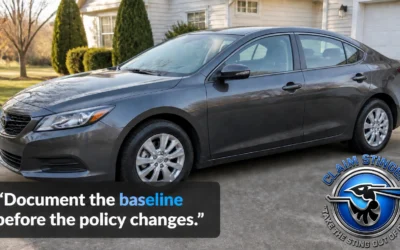
The strongest time to document your vehicle is before a collision occurs.
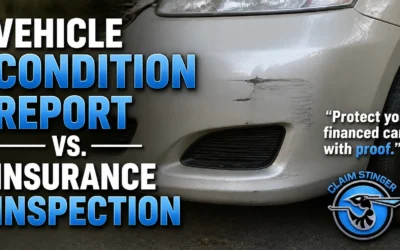
A Vehicle Condition Report creates a time- and date-stamped record of the vehicle’s visible condition, mileage, and supporting photographs. It is especially important for financed vehicles because the loan may continue even after the vehicle’s value has fallen.
Consumer-grade photographs are appropriate for this purpose. The value is not studio quality. The value is the truth as captured at a specific time, before the loss.
When completing documentation, focus on:
- Every exterior angle
- The odometer and VIN location, where appropriate
- Wheels, glass, lights, trim, and body panels
- Existing wear or damage larger than a standard credit card
- Factory options and notable equipment
- Recent maintenance, upgrades, or replacement parts
- The date, time, and location of the documentation
Use the Credit Card Rule consistently: treat visible wear or damage as reportable damage only when it is larger than a standard credit card, approximately 2.5 by 4 inches. Normal minor scuffs and ordinary wear should not be exaggerated.
A current Vehicle Condition Report is listed at $39. It does not guarantee a particular valuation or settlement, but it gives you a stronger baseline when questions arise about what damage existed before the accident and what your vehicle was worth before the loss.
“Protect the evidence before the vehicle disappears.”
2. Inspect the line-item repair estimate
A total-loss decision may rely on an estimate that is incomplete, preliminary, or built around assumptions that change once the vehicle is disassembled.
Ask for the complete line-item estimate and review it carefully. You are looking for omitted operations, not simply a higher total.
Pay attention to whether the estimate addresses:
- Structural measurements and inspections
- Hidden damage behind bumpers, fenders, or interior panels
- Proper replacement procedures
- Required one-time-use fasteners and components
- Airbag and restraint-system inspections
- ADAS scans and sensor calibrations
- Diagnostic scans before and after repairs
- Wheel alignment and suspension checks
- Corrosion protection and refinishing operations
- Manufacturer repair procedures
- Necessary supplements discovered during teardown
A vehicle can look driveable while still requiring safety-related work. Conversely, an initial estimate may include broad assumptions that should be verified before the vehicle is classified as beyond repair.
Ask the insurer or repair facility:
“Please identify every operation included in the total-loss calculation, and provide the basis for any omitted safety, structural, diagnostic, or calibration work.”
Claim Stinger’s Initial Damage Estimate Report is intended to help organize initial damage information for collision and hail claims. However, this product is coming soon and is not currently available. It should not be represented as an available service today, and it does not replace a licensed repair facility’s teardown, engineering review, or state-required inspection.
3. Verify the comparable vehicles and actual cash value
A low ACV can make reasonable repairs appear uneconomical. That is why valuation deserves the same scrutiny as the repair estimate.
Request the insurer’s valuation report and examine:
- Year, make, model, and trim
- Mileage adjustments
- Factory packages and options
- Drive type and engine configuration
- Geographic location of the comparables
- Prior damage or adverse history
- Condition adjustments
- Dealer versus private-party listings
- Whether the comparable vehicles are actually available
- Sales tax and required fees, where applicable
A comparable vehicle should be genuinely comparable. A base-trim vehicle should not automatically be used to value a higher-trim model with meaningful factory options. A vehicle several hundred miles away may not reflect your local market. A listing with prior damage may also distort the comparison.
Gather your own documentation:
- Purchase records
- Maintenance records
- Upgrade receipts
- Recent tires or major components
- Factory window sticker, if available
- Local listings for similar vehicles
- Evidence of unusually good pre-loss condition
Then compare your evidence with the insurer’s report. You are not arguing that your vehicle is worth an emotional amount. You are asking whether the valuation reflects the actual local market.
“Challenge the math before you surrender the asset.”
4. Review salvage retention and state-specific thresholds
If the insurer says the vehicle is a total loss, ask which rule or policy provision controls the decision.
Your state may use a percentage threshold, a total-loss formula, or another statutory framework. Some jurisdictions also have separate title, salvage, inspection, or notice requirements. Insurers may have internal procedures that are more conservative than the state’s minimum threshold, subject to applicable law and policy terms.
Ask for the following in writing:
- The vehicle’s calculated ACV
- The full repair estimate
- The salvage value used
- The applicable state threshold or formula
- Whether the vehicle is being totaled because of economics, safety, title rules, or a combination
- The settlement with insurer-retained salvage
- The settlement with owner-retained salvage
If you are considering keeping the vehicle, Claim Stinger’s Consumer Notice of Property Retention may be relevant as a document-generation option for communicating a property-retention position. Before using any legal notice, confirm that it fits your state’s requirements and your specific claim.
Owner-retained salvage can reduce the settlement because the insurer may deduct the estimated salvage value. The vehicle may receive a salvage or rebuilt title, require inspection, become harder to insure, and cost more to repair than expected. Do not retain a totaled vehicle without understanding the safety, title, financing, and insurance consequences.
5. Preserve repair completion and diminished-value evidence
Sometimes the vehicle is repaired rather than totaled. That does not end the documentation process.
After repairs, preserve:
- Final repair invoices
- Parts receipts
- Supplement records
- Alignment results
- Diagnostic scans
- Calibration records
- Before-and-after photographs
- Warranty information
- The date the vehicle was returned to service
A Closed Claim Report, currently listed at $39, can help organize photographs, receipts, and repair documentation into a record of completed work. It does not certify that a repair was safe or guarantee future claim acceptance, but it can reduce confusion when a later insurer asks whether prior damage was actually repaired.
A repaired vehicle may also lose market value because of its accident history. That loss is known as diminished value. Eligibility, measurement, and recovery rules vary substantially by state and claim circumstances.
Claim Stinger’s Diminished Value Claim Report is currently listed at $89. It is designed to help document post-accident market-value loss and support communications with an insurer. It does not promise payment, recovery, or acceptance of a demand.
For property-related claims, the Property Closed Claim Report is listed at $39. It is not an auto total-loss product, but it can help homeowners preserve proof that prior repairs were completed before a later property claim.
A practical script for your insurer
Use a calm, written request such as:
“I am reviewing the total-loss determination and request the complete line-item repair estimate, valuation report, comparable vehicles, ACV calculation, salvage value, and the state rule or policy provision used in the decision. Please identify any omitted structural, safety, diagnostic, or calibration operations. I am also requesting both the insurer-retained and owner-retained salvage settlement calculations. This request is for review and does not constitute acceptance of the current valuation or settlement.”
Keep copies of every email, letter, estimate, photograph, and phone-call note. Do not sign a release or surrender the title until you understand what it resolves.
Your total-loss review checklist
- Obtain the complete repair estimate
- Ask about supplements and omitted operations
- Verify structural, safety, and calibration work
- Request the insurer’s ACV valuation report
- Check comparable vehicles for trim, mileage, condition, and location
- Review the applicable state threshold or formula
- Request the salvage value calculation
- Contact your lender and review GAP coverage
- Ask about owner-retained salvage consequences
- Preserve all vehicle evidence before transfer or dismantling
- Document completed repairs if the vehicle is repaired
- Evaluate diminished value where legally appropriate
The protective conclusion
A total-loss decision may be correct. It may also be based on incomplete documentation or numbers that deserve review.
You have the right to understand the calculation. You have the responsibility to preserve the evidence. And you should never confuse an insurer’s first number with an independently verified conclusion.
Start before the crisis with a Claim Stinger Vehicle Condition Report, review available products and services, and document the claim through each stage. If the vehicle is repaired, close the record. If value is lost after the accident, preserve the diminished-value evidence.
The time to protect the facts is before the file closes.
0 Comments